

Most people still picture a voice agent as one of two things. One is a nicer IVR that answers the phone. The other is a robot that cold-calls you about a credit card. Both are the least interesting things a voice agent does.
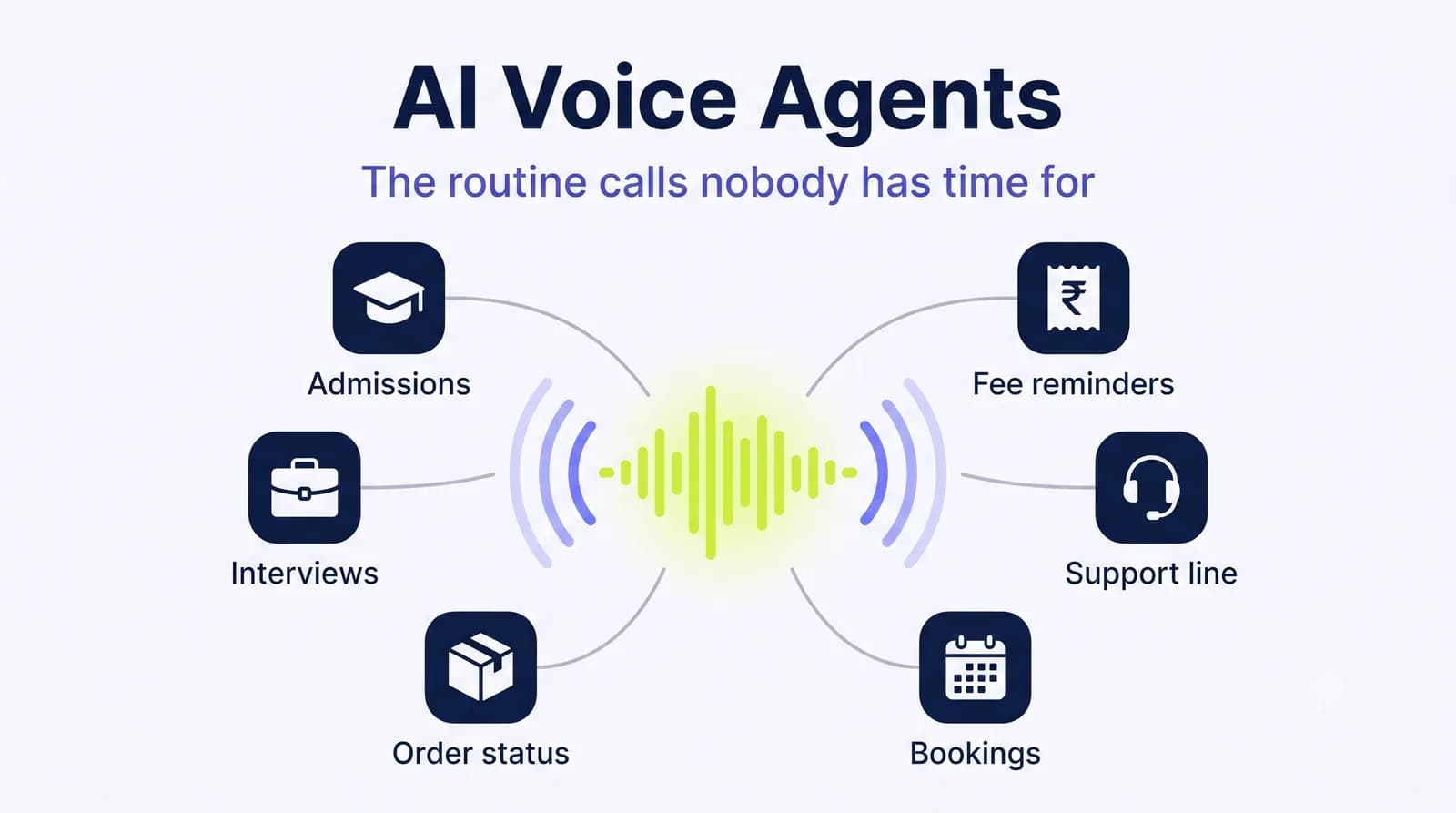
The useful work is in the routine calls nobody has time for. Someone reminds a parent that the fee is due on Friday. Someone answers a student who wants their exam centre at 10pm. Someone asks a departing employee why they are leaving and writes the answer down the same way every time. These calls follow a script and need a record. Each one also takes a person away from something harder.
We built a demo workspace on our AI voice agent platform with 18 agents for fictional institutions: a university, a school, an IT company, an online retailer, a lender, a SaaS business and a paint maker. Each agent has its own voice, its own opening line, a knowledge base of the institution's documents and, where it helps, a live lookup into a mock system of record. Building them showed us which calls an agent handles well, and why.
What is an AI voice agent? An AI voice agent is software that answers or places phone calls, holds a natural conversation in the caller's language, looks up and records information in your business systems, and hands anything it cannot resolve to a person. Unlike an IVR, the caller speaks normally instead of pressing keys.
What happens on one call
Before the use cases, here is what every one of these agents does on a single call, in order.
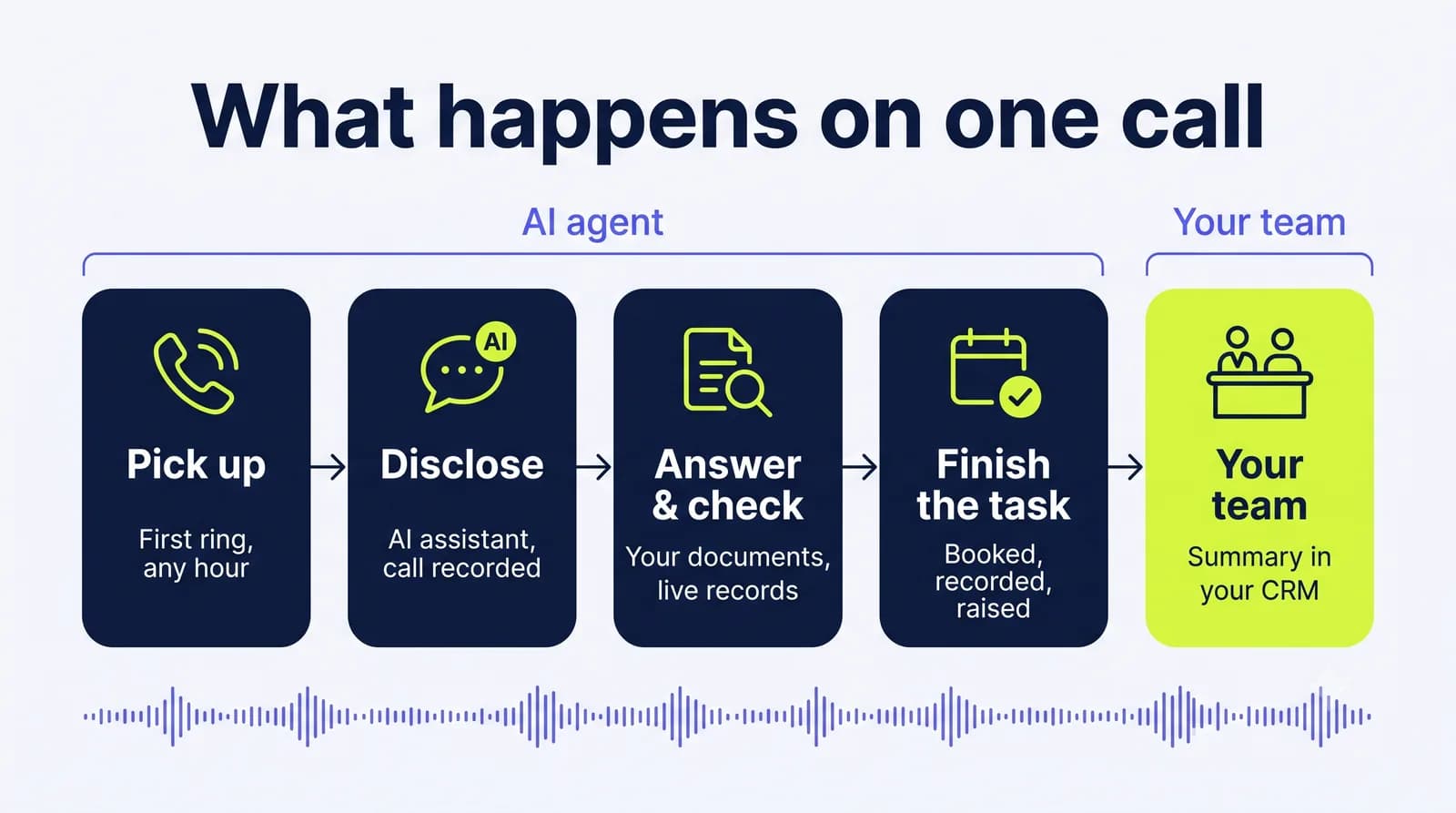
It picks up, or it dialsAI agent
An inbound caller is answered on the first ring, inside the hours you set. An outbound contact is called inside your calling window, with retries.
It says what it isAI agent
The opening line names your organisation, says the caller is talking to an AI and that the call is recorded. A caller who objects is not argued with.
It talks, and checksAI agent
It answers from your documents and, when the caller asks about their own order or fee, looks the record up for the number they are calling from.
It finishes the taskAI agent
A meeting booked in a real free slot, a promise-to-pay date recorded, a ticket raised, or a callback agreed.
Your team takes it from thereYour team
A summary, a score, the extracted fields and the recording land in your CRM. A WhatsApp follow-up goes to the caller. A person picks up anything flagged.
Ten jobs a voice agent does well today
Education
1. The admissions desk
An applicant calls at 9pm about eligibility, fees and the last date. The agent answers from your prospectus and fee sheet, notes the course of interest, and hands anything it does not know to the admissions team instead of guessing.
2. Application follow-up
Someone started an application three weeks ago and stopped. The agent asks what got in the way (a document, the fee, a doubt about the course) and records the blocker as a field your counsellors can filter on.
3. Fee reminders
It reads the amount and due date from the record, reminds politely and notes the date the parent commits to. A disputed fee is recorded for the accounts office, never argued.
4. Exam and result helpline
On results day, hundreds of students ask the same five questions in an hour. With a live lookup it answers "when is my exam" and "has my fee been received", only for the number the student is calling from.
5. Alumni and placement surveys
The same questions in the same order for every graduate: where they work, their role, and a 1–10 rating of the programme. An accreditation team gets its data in days instead of weeks.
HR and hiring
6. First-round telephonic interviews
The agent calls candidates, or answers when they ring in, and asks questions drawn from the job description and the CV. Each score is backed by quotes from the answers. It never rejects anyone: a recruiter reads the report and decides. How the telephonic round works.
7. Onboarding check-ins and exit interviews
Calls HR knows it should make and rarely does. Did the new joiner's laptop arrive? Why is this person leaving? Asked calmly and neutrally, with answers you can count across the company.
Support, collections and sales
8. The support line
A retailer's agent finds the order behind the caller's number and says where it is, explains returns from the policy document, and escalates a damaged-item claim with the details a person needs. HR and IT helpdesks work the same way.
9. EMI and renewal reminders
It states the facts, records the promise to pay or the reason for the delay, and stays courteous. Collections is where a script matters most: a human caller on a bad day does real harm.
10. Re-engaging quiet leads
A prospect went quiet four months ago. The agent asks what changed (budget, timing or a competitor) and books a meeting into a real free slot in the rep's calendar. See the AI voice agent for inbound calls.
Not every agent in the demo fits neatly into one of these ten. There is a webinar RSVP caller and a Hindi-language feedback survey for paint dealers. Once one agent is working, a team tends to find the next call worth handing over.
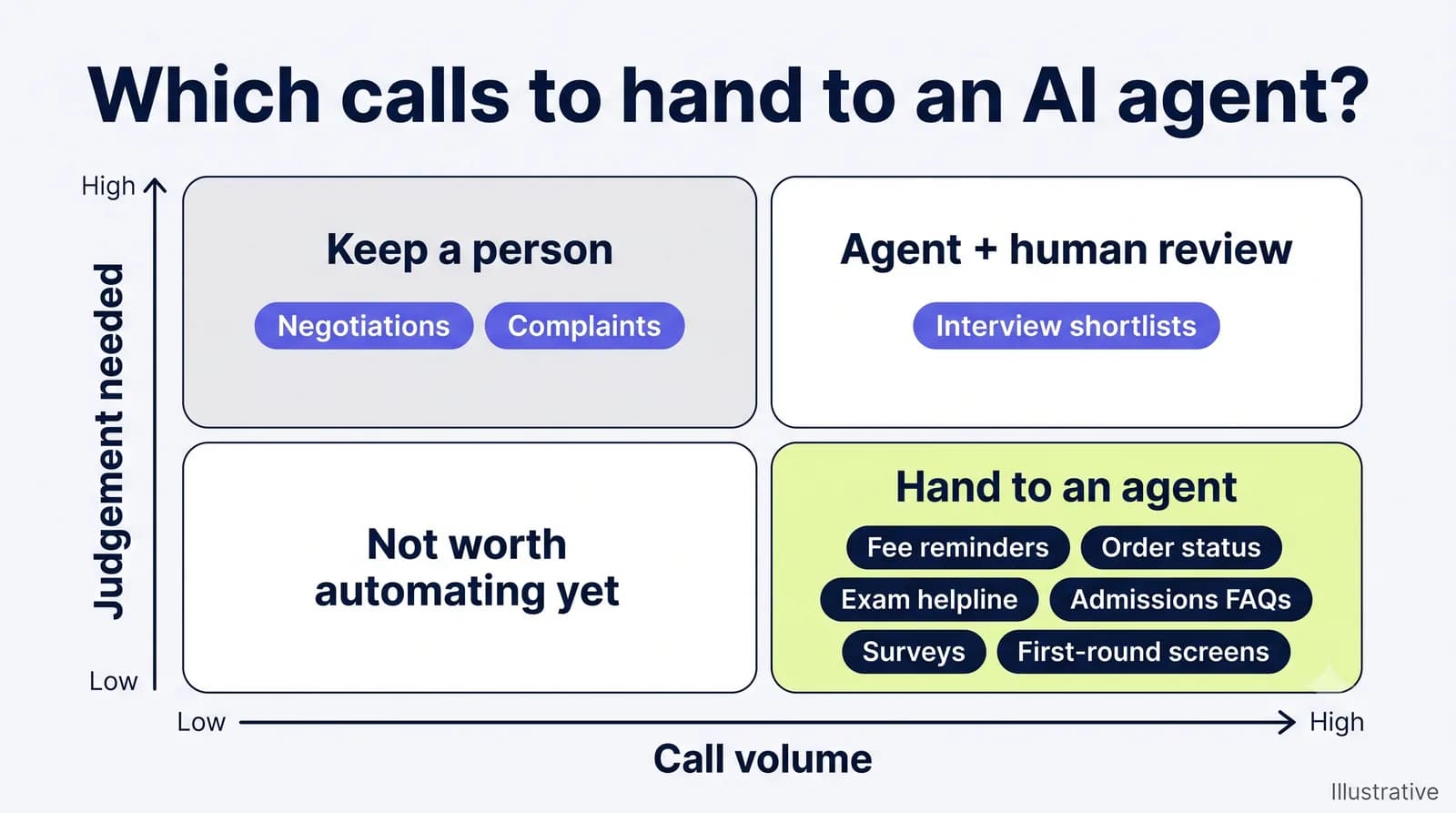
High volume, a known script, and an answer someone needs written down. If a call needs judgement on every turn, keep a person on it. If it needs the same five questions four hundred times, it is a candidate.
Six trends shaping voice AI
1. From conversation to completed task
A voice agent used to end with a transcript. Now the call ends with something done. A meeting is booked against real calendar availability. A follow-up goes out on WhatsApp. A record lands in the CRM as a deal or a ticket. Voice platforms across the market are adding documents, messaging and system actions to the conversation. Measure an agent by the tasks it completes, not by how natural it sounds.
2. Live lookups, with the caller's number as the key
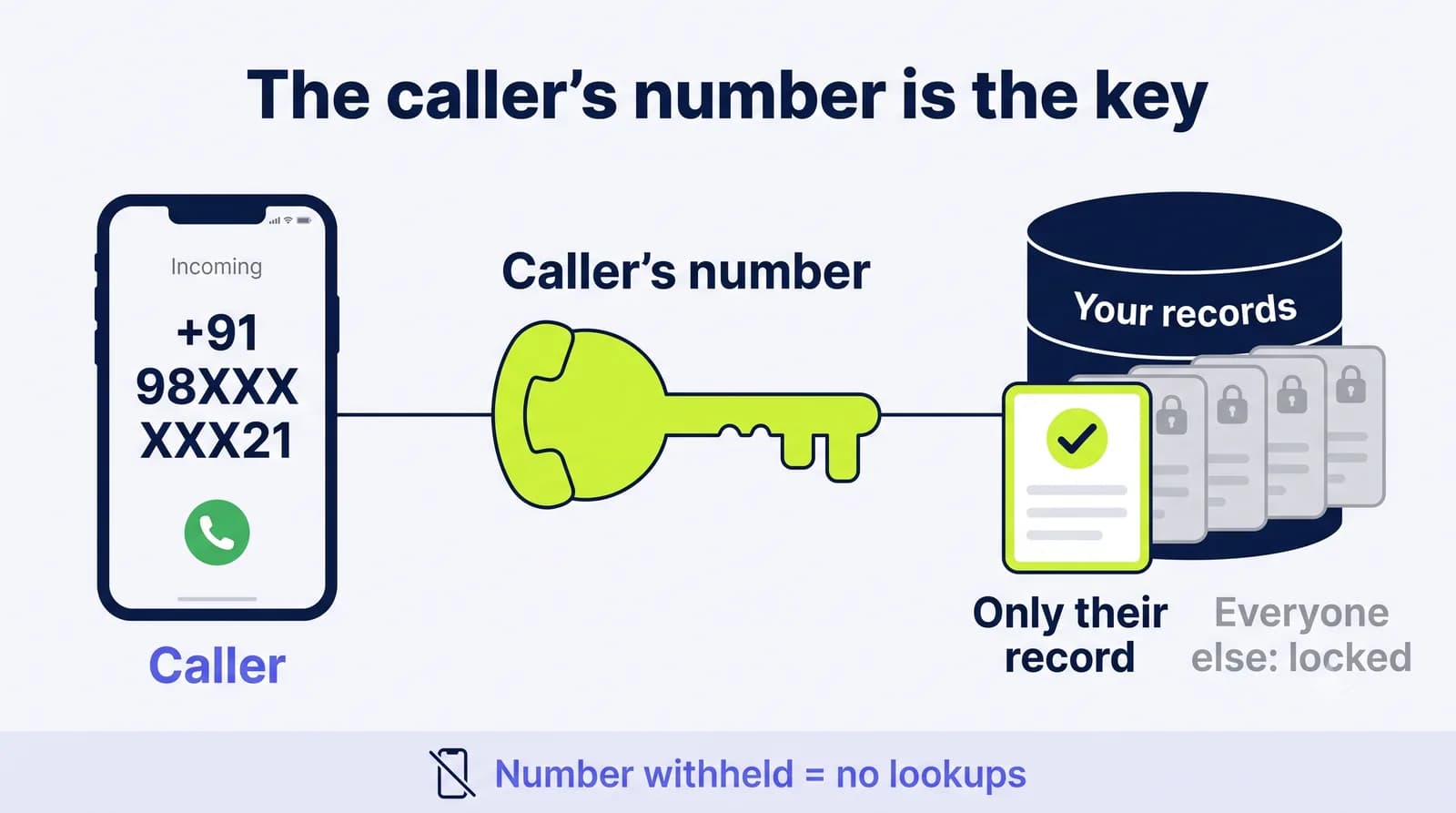
The most useful sentence an agent can say is "let me check that". Agents are now connected to order systems, fee ledgers and ticketing tools through plain APIs and the Model Context Protocol (MCP). That makes privacy a design question. Who is the agent allowed to look up? The safe default is to show a caller only the records tied to the number they are calling from. A withheld number gets no lookups.
3. Indian languages, and the language between them
Callers in India switch between Hindi and English in the middle of a sentence, and an agent that insists on one language loses them. Speech models for Indian languages have improved quickly this year. Still, a vendor's list of languages does not mean every language works equally well. Test with your own callers, your product names and real phone audio before you promise a language.
4. Interviews are getting real evidence
Human recruiters made the hiring decisions in both groups. Jabarian and Henkel, July 2026
It is one study, and it does not cover every role or language. But AI screening now has evidence behind it, not just enthusiasm, and the design rule is clear: the agent screens and a person decides.
5. Knowledge bases replace the script
The old voice bot followed a decision tree. The current pattern is to upload the brochure, the fee sheet and the policy document, and let the agent find the right passage while the caller is still talking. The skill that matters is what you leave out. If a price or policy is not in the material, the agent should say the team will confirm, not guess.
6. Compliance is now part of the product
In India, TRAI does not treat an AI calling for business any differently from a person. Outbound promotional calls need DLT registration, DND scrubbing and the 9am–9pm window. Under the DPDP Act, a recorded notice does not count as consent. These rules govern calls a business makes, not calls it receives, so an agent that only answers inbound calls avoids most of them.
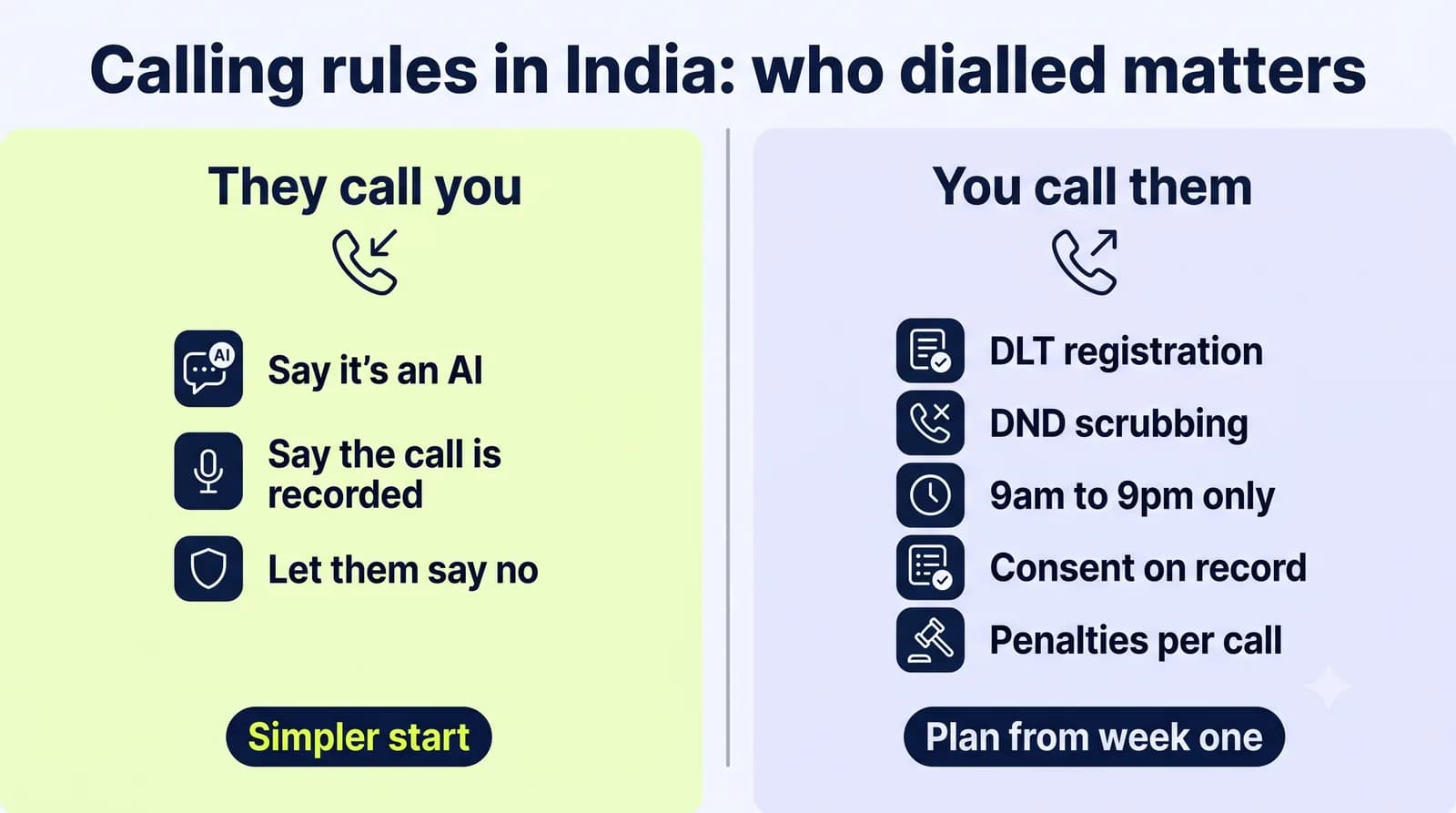
Answering your own phone needs nobody's permission but the caller's: say it is an AI, say the call is recorded, and let them say no. Calling out adds DLT registration, DND scrubbing and the calling window. Plan for those in week one, or start with inbound.
Where to start
Pick one callYour team
A call your team already makes or takes at volume.
Name the number it should moveYour team
Missed calls in a week, fees past the due date, days from application to first interview. One number someone already tracks.
Give the agent its materialYour team
The documents that call depends on, a voice and an opening line.
Run it for a monthAI agent
Against that number, with a person reading every flagged call.
Add the second agentYour team
Once the platform, voices and knowledge bases are set up for one call, each new agent mostly needs a new opening line and a new document.
Quick answers
How is an AI voice agent different from an IVR?
An IVR makes the caller press keys through a fixed menu. An AI voice agent lets the caller say what they want in their own words, answers from your documents, checks live records and completes the task, such as booking a meeting or recording a payment date.
Which calls should a business automate first?
Calls that are frequent, follow a known script and end in something that must be written down: fee and EMI reminders, order status, exam or admission helplines, surveys and first-round screening interviews. Keep negotiations and complaints with a person.
Do callers need to be told they are talking to an AI?
They should be, at the start of the call, along with the fact that the call is recorded. Under India's DPDP Act a recorded notice is not consent, so the caller must be able to say no, and the agent should end the call politely if they do.
Is it legal to use an AI voice agent for outbound calls in India?
Yes, under the same rules as a person making a commercial call. TRAI requires DLT registration, scrubbing against the National Customer Preference Register (DND) and, for promotional calls, the 9am to 9pm window. Answering inbound calls carries none of that registration.
Which languages can an AI voice agent speak in India?
It depends on the platform. Ours speaks English, Hindi, Marathi, Tamil, Telugu and Kannada, and follows callers who mix Hindi and English. Test each language with your own callers and real phone audio before you rely on it.