

Skip to content
Splashgain

What agentic AI is

Four layers, not four buzzwords

Each layer contains the one inside it. The four words get swapped around in vendor decks — they are not the same thing, and the gap between the second and the fourth is what you are actually buying.

Agentic AI

Where we build

Runs the whole job. Several agents, one goal, guardrails, and a way back.

AI Agents

Acts on the answer. It has tools, memory, and permission to use them.

Gen AI

Where most AI projects stop

Produces an answer. Ask it, and it writes, scores or summarises.

AI & ML

Learns patterns from data. It classifies, predicts and reads.

The same difference, in four questions

Gen AIAgentic AI
What you getText you then act onA task already finished
What it remembersThe conversationYour system of record
When it is wrongYou catch itIt rolls back and pages a human
When it runsWhen someone asksOn a schedule, unattended

How it works

Four capabilities, one engine

Every product draws on the same models. What we learn proctoring an exam improves how we read a marksheet.

Vision AI

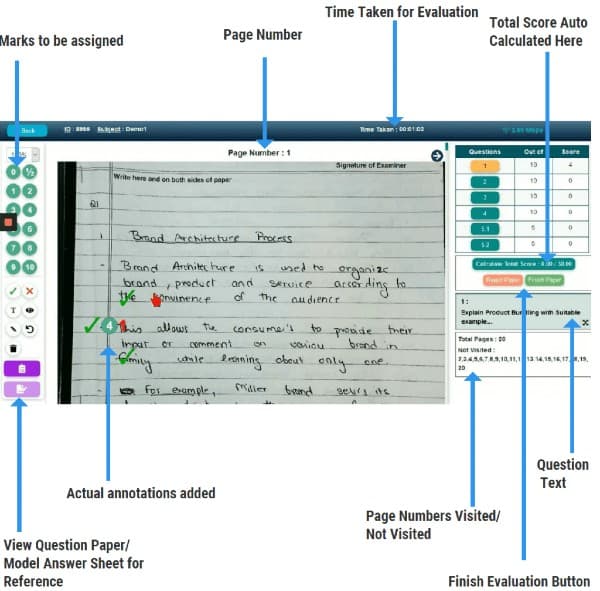
Computer vision that verifies candidate identity, watches for exam-hall malpractice and reads handwritten answer sheets.

A proctor reviewing live candidate feeds with an identity check overlaid on one of them

Trained on

Live proctoring sessions and scanned answer scripts from Eklavvya exam deployments — not stock footage.

Used by

Eklavvya

Outputs

  • Real-time face detection and identity verification
  • Object and behavior flagging — phones, tab-switching, unauthorized apps
  • Handwriting OCR that converts answer scripts to searchable digital text

Document AI

Extraction and verification models that read and validate government IDs and academic documents.

Document AI extracting fields from a government-issued document

Trained on

Government-issued IDs, marksheets, certificates and admission documents processed through DocuExprt.

Used by

DocuExprt

Outputs

  • OCR and field extraction from PDFs, images and scans
  • Government database checks — Aadhaar, PAN, DigiLocker
  • Tamper and signature detection across 20+ document types

Generative Evaluation

Models that assess free-form work and generate the instruments used to test it.

Generative evaluation model scoring a descriptive answer

Trained on

Manually evaluated answer sheets — evaluators grade the first 20–25% of a batch, and the model learns the marking pattern before grading the rest.

Used by

Eklavvya

Outputs

  • Descriptive answer scoring with explained feedback
  • Question paper generation from a syllabus, tagged to Bloom’s Taxonomy
  • AI-conducted interviews and adaptive case-study assessments

Agentic Workflows

The layer that connects the platform to the systems an institution already runs — as an API, a no-code automation, or an AI agent.

Agentic workflows connecting the platform to cloud automation

Trained on

Built on documented REST endpoints, webhooks and Model Context Protocol servers shared across all three products.

Used by

Eklavvya and DocuExprt

Outputs

  • Documented API endpoints with webhooks for real-time status
  • n8n and Make workflow connectors
  • Model Context Protocol servers so AI assistants can query the platform directly

The agentic stack

LLMs, orchestration and automation — how the agents actually run

Large Language Models

Frontier LLMs — served through Vertex AI and Azure AI services — power descriptive answer evaluation, question paper generation, AI interviews and counseling agents. The platform is model-agnostic by design: the right model per task, swapped without rewiring the product.

AI Orchestration

Agents do not run alone. Self-hosted n8n engines, MCP servers and documented REST APIs orchestrate multi-step processes — retrieval, evaluation, verification, notification — across all three products and the systems an institution already operates.

Process Automation

The workflow around the AI is automated end to end: answer-sheet ingestion, document pipelines, admission rounds, result publication and follow-ups run as scheduled, monitored automations, with WhatsApp and email dispatched by the same agents — so a candidate hears about a result without anyone sending the message. Humans review the exceptions instead of executing every step.

Applied AI Technology

Computer vision, OCR and generative evaluation models trained on the platform’s own production data — proctoring sessions, answer scripts and verified documents — not stock datasets, so accuracy is measured against real institutional workloads.

How we build it

Four disciplines behind every agent we ship

Agentic software does not behave like the software before it — ask the same question twice and you can get two answers. Putting that into an exam hall or an admissions office takes more than a model. These four disciplines are what our engineering team is held to.

  1. Measuring what the model actually does

    An LLM’s output is a probability, not a guarantee, so evaluation is engineering here rather than QA. Every agent ships against a scored eval set drawn from real institutional data, and error analysis runs on the cases it got wrong, not the ones it got right. On descriptive evaluation that is literal: evaluators grade the first 20–25% of a batch, and the model is measured against their marking pattern before it touches the rest.

  2. Fundamentals before the model

    Most of what makes an AI system trustworthy is ordinary engineering — cost, latency, failure modes, data residency, who is allowed to see which record. Knowing those tradeoffs is what lets us stay model-agnostic: the right model per task, swapped without rewiring the product, because the architecture around it was built to allow the swap.

  3. Building with agents, under review

    Our engineers build with coding agents daily, under the same discipline we sell: tight context, a verifier so the agent can close its own loop, and a named human accountable for what merges. That is why capability lands in weeks instead of quarters — and why no agent is ever pointed at production data unsupervised.

  4. Shaping the build with you

    Given a clear spec, agents deliver. Deciding what belongs in the spec is the harder half, and it runs on your context, not ours — how an exam board actually clears a result, what an admission round has to finish by. We shape the problem with your team, put a narrow version in front of real users early, and slow down deliberately where being wrong is expensive.

Underneath all four is an assumption that this field keeps moving. What we ship next year will not be built the way this was.

Ready to see it in action?

Or call +91 95525 86428

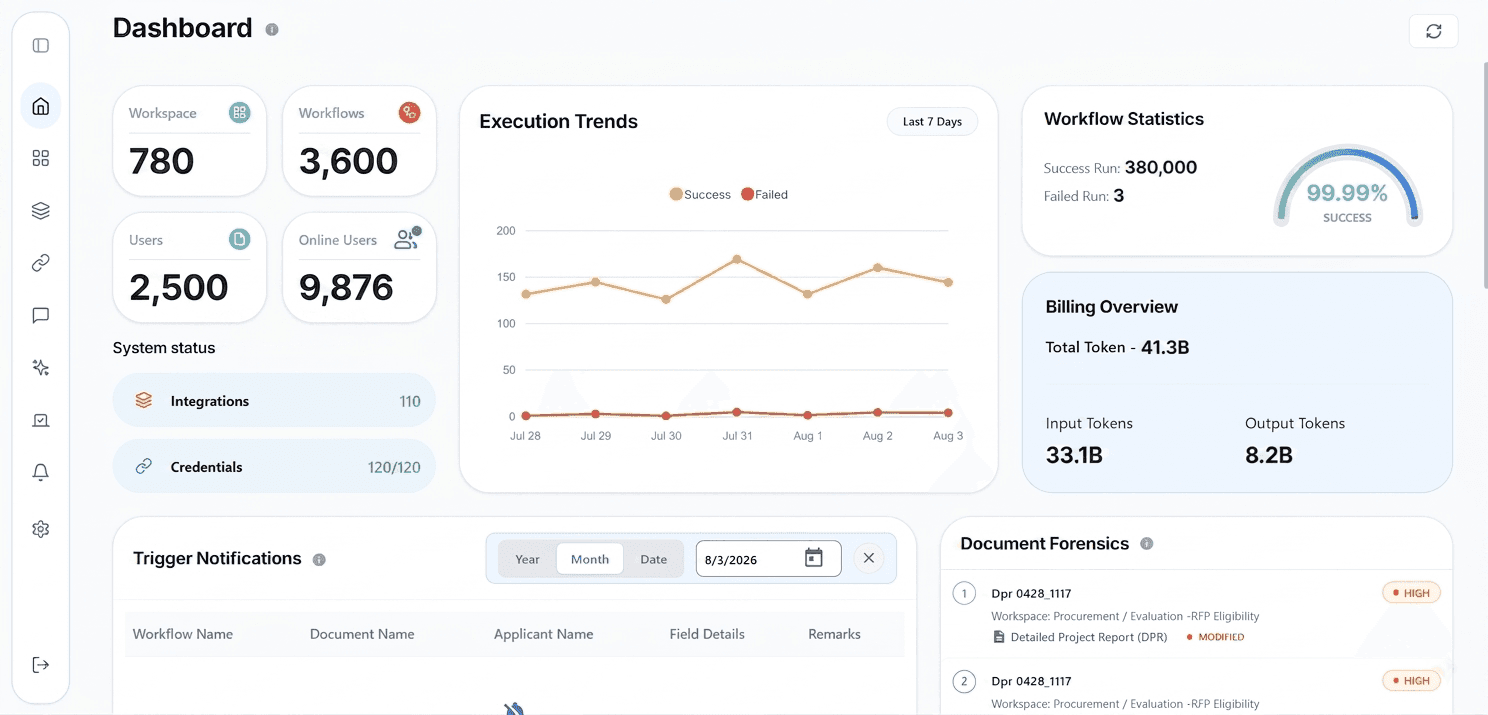
An analytics dashboard showing execution trends, a 99.99% success gauge and workflow throughput counters

Reporting

The same reporting layer, whichever product produced the data

Scores, competencies and throughput come out of one analytics engine, so an exam result, a verified document and an admission round are all measured the same way and can be read side by side.

  • Competency and topic-level breakdowns
  • Cohort, centre and round comparisons
  • Exports and API access to every figure

Ready to see it in action?

Tell us the process you want to automate — we'll show you the platform on it.

Or call +91 95525 86428

Infrastructure and integrations

Runs on what you already trust

Splashgain is a partner of both Google Cloud and Microsoft Azure. Google Kubernetes Engine already carries exams at national scale, agent and automation workloads run on DigitalOcean and n8n, and the platform meets your stack through documented APIs rather than a migration.

Multi-cloud by design

  • Google Cloud — partner

    GKE runs up to 50,000 concurrent exams at 100% uptime; Vertex AI and Vision AI extend evaluation and proctoring

  • Microsoft Azure — partner

    Azure compute and AI services running alongside Google Cloud

  • DigitalOcean

    Containerized AI agents and automation services

  • n8n workflow engines

    Self-hosted automation orchestrating agent workloads behind every product

  • Multi-provider S3 storage

    Documents and recordings distributed across multiple S3-compatible providers to scale

  • MongoDB

    Document store behind agent state, workflow runs and unstructured assessment data

  • BigQuery

    Rolling out as the assessment analytics warehouse

Plugs into what you already run

  • REST API

    Documented endpoints with webhooks

  • n8n

    Self-hosted workflow automation

  • Make

    No-code system-to-system automation

  • MCP

    Model Context Protocol servers for AI assistants

  • WhatsApp Business API

    Candidate and applicant messaging — reminders, status and results

  • Email automation

    Transactional and bulk mail on Amazon SES — verification, reminders, results and follow-ups, sent and tracked by agents

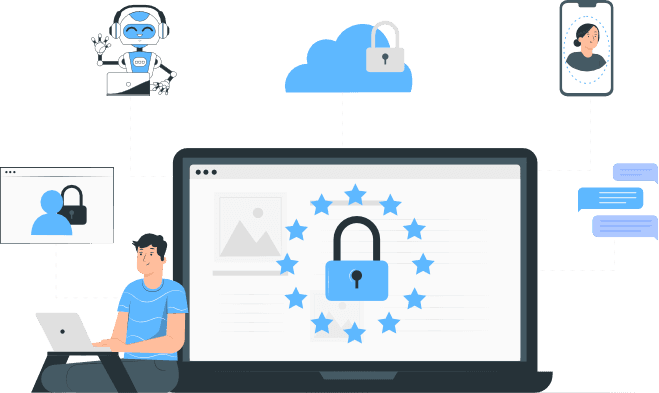
A candidate working behind a security layer that verifies the session before it starts

Security

CERT-IN certified, on infrastructure you can name

The platform runs multi-cloud on Google Cloud and Microsoft Azure with a MeitY-empanelled security audit behind it. Data residency, encryption and retention are configured per customer rather than assumed.

  • CERT-IN certified security audit
  • Encryption in transit and at rest
  • Configurable residency and retention

Security

Certified, not just claimed

  • CERT-IN Certified

Which product do I need?

The platform, packaged for what you run

Eklavvya

Assessment, proctoring and evaluation

  • Large-scale secure exams
  • AI proctoring and onscreen marking
  • Generative AI skill assessment

40M+Assessments delivered

Explore Eklavvya
DocuExprt

Document verification and automation

  • Extract and verify any document
  • Government API integrations
  • Workflow automation and audit trails

99.5%Extraction accuracy

Explore DocuExprt
ePravesh

Admissions and enrollment

  • Forms, fees and payments
  • Merit lists and seat allocation
  • AI counseling agents

2M+Applications processed

Explore ePravesh

Prefer to see the agents on their own? Browse the AI employees and agent packs.

Questions

Before the demo

What is the difference between an AI agent and agentic AI?

An AI agent is one worker: it takes a goal, picks a tool, does a step and reports back. Agentic AI is the system around several of them — decomposing a goal into steps, handing work between agents, holding state across a process that runs for days, and rolling back cleanly when a step fails. One agent answers an admission query. An agentic system runs the admission round.

Is this just a chatbot with a different name?

No. A chatbot returns text and leaves the work to you. These agents write to the systems you already run — verifying a document, releasing a result, escalating a ticket — inside permissions you set, with every action logged and reversible. If it can only talk, it is not an agent.

Free presentation · 13 slides · PDF

Take the deck to your leadership team

The presentation we walk boards and CXOs through — thirteen slides on what deploying AI agents actually involves, from the roles to the guardrails to the commercials.

  • The eleven AI employees, and the job each one holds
  • Eight department packs, and the agents inside them
  • Six weeks from first conversation to one agent in production
  • Three commercial models, and what each includes
Download the deck

No cost. Work email and organisation only.

Talk to us about the process you want to automate.

Tell us what you run today. We will show you what the platform does with it.

Book a Demo

Or call +91 95525 86428

Book a demo

See it running on your process