

A municipal complaint management system is software that gives every citizen complaint a case number, a category, an owner and a deadline, and keeps it visible until someone records what was actually done. Most corporations and councils already have one. Far fewer have one that staff trust enough to stop keeping their own register on the side.
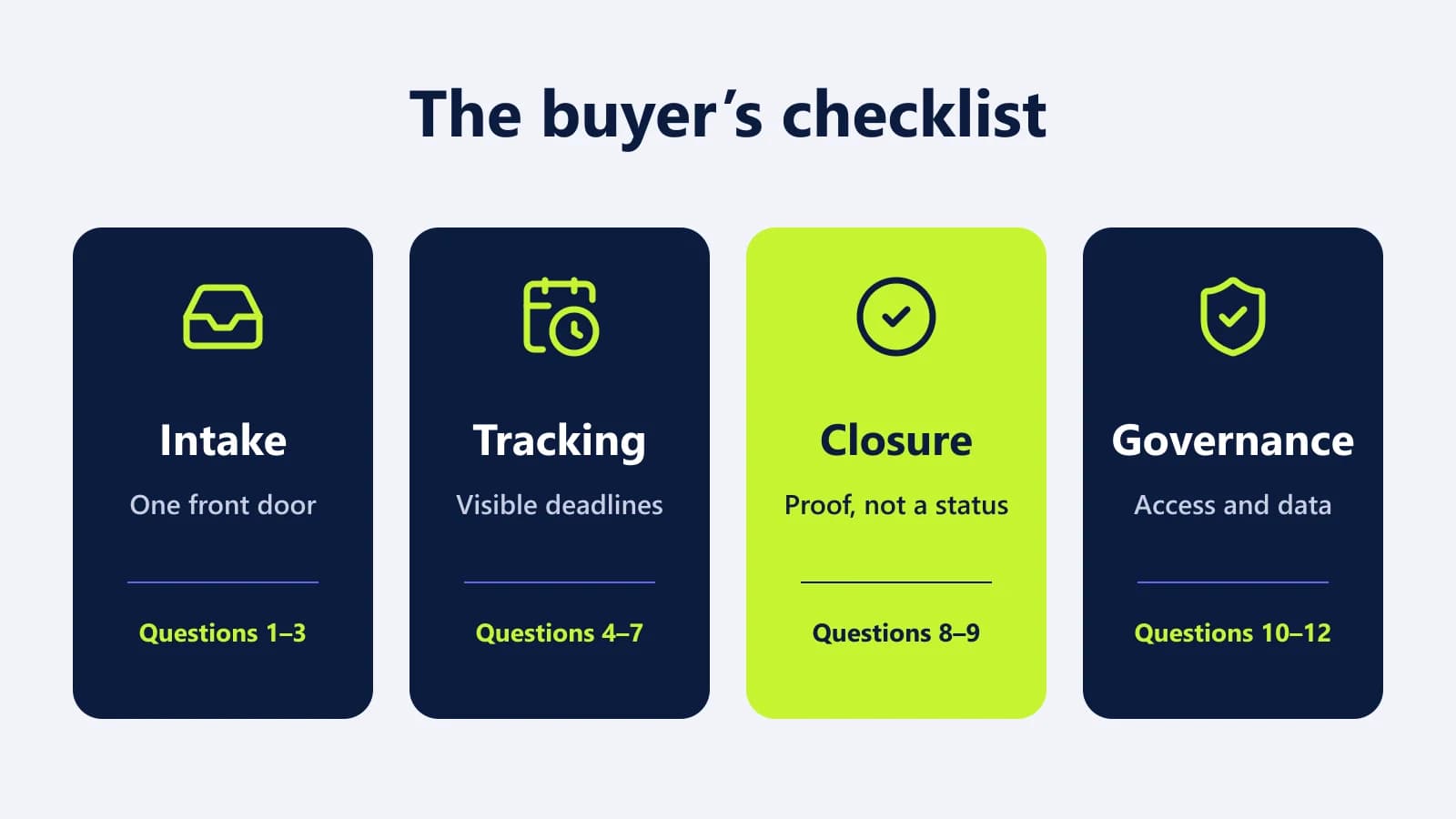
The gap is rarely the software's feature list. It is the requirements nobody wrote down before buying it. This checklist is the one we would want a city to hand us, and any other vendor, before a demo.
Why the requirements have tightened
Service-time expectations are now written into rules, not left to goodwill. The Centre cut the maximum redressal time on its CPGRAMS grievance portal from 30 days to 21 in August 2024. When the Swachhata app launched, the urban development ministry set category targets as short as 12 hours for overflowing dustbins and garbage dumps. And under Maharashtra's Right to Public Services Act, an officer who delays a notified service can be fined up to ₹5,000 per case.
A deadline you cannot see is a deadline you will miss. That turns the complaint system from a filing cabinet into the tool that decides whether the office meets its obligations.
Intake: one front door for every channel
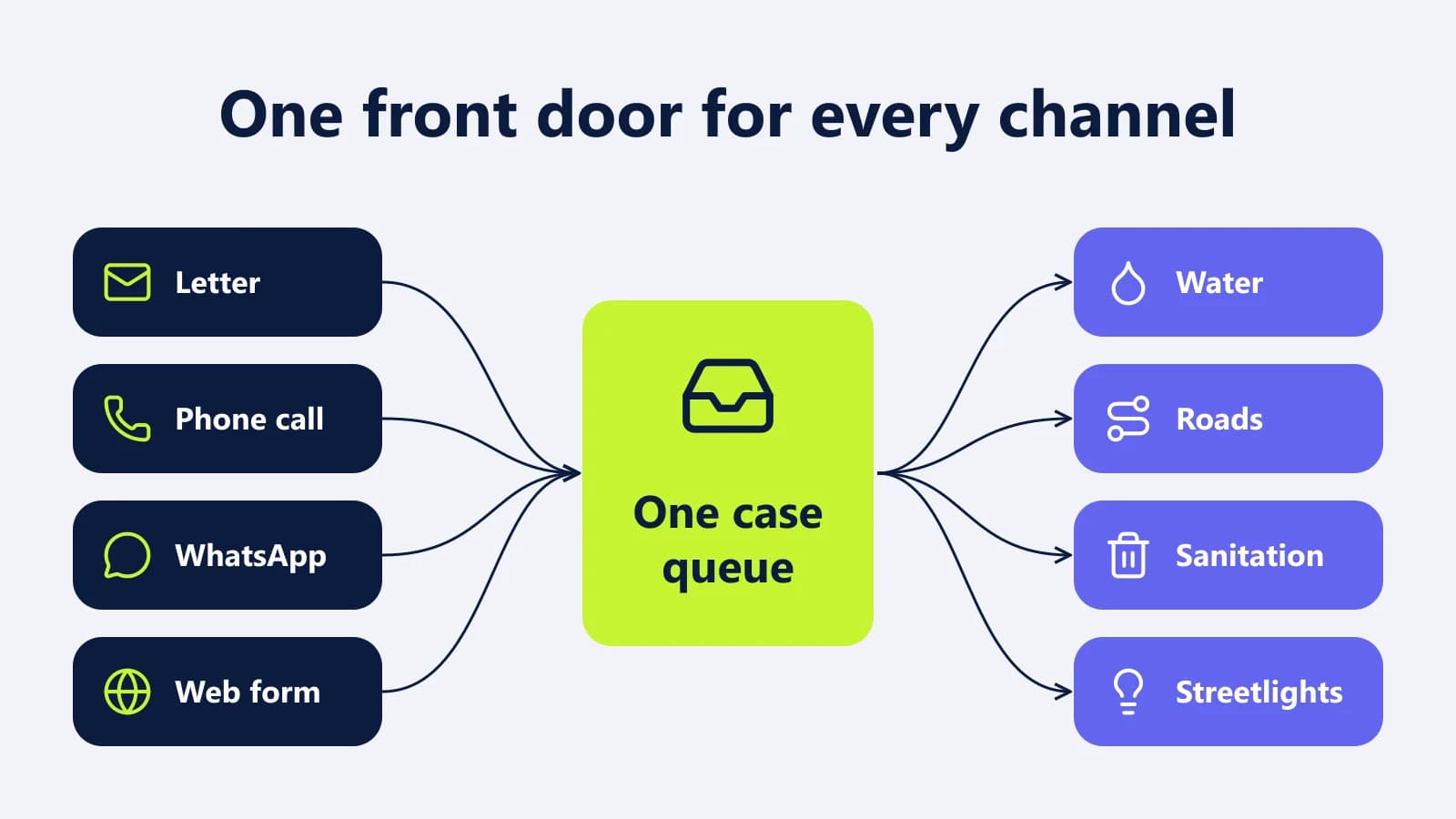
1. Does every channel feed one case record?
Complaints arrive as walk-in letters, toll-free calls, WhatsApp messages and portal forms. Require that all of them create the same kind of case, with the same number format, in the same queue. If WhatsApp complaints live in one phone and letters live in an inward register, the office has two systems and a reconciliation job.
2. Who decides which department owns the complaint?
The system should, not the citizen. A resident reporting a broken pipe outside a school should not have to know whether that is water supply, roads or education. Ask the vendor to show how a complaint is categorised and routed to a department and ward, and what happens when the routing is wrong.
3. Can it read scanned and handwritten petitions in your languages?
In most offices, paper is still the largest channel. Require extraction of the applicant, subject and location from a scanned letter in the languages you actually receive. Marathi and English are the minimum for a Maharashtra municipality. Then require the second half: low-confidence reads must go to an operator to compare with the original before anyone relies on them.
Bring three real petitions, redacted: one typed, one handwritten, one photographed on a phone. Watch what the system does with the one it cannot read clearly. A system that guesses silently is worse than one that asks.
Tracking: deadlines that are visible before they are missed
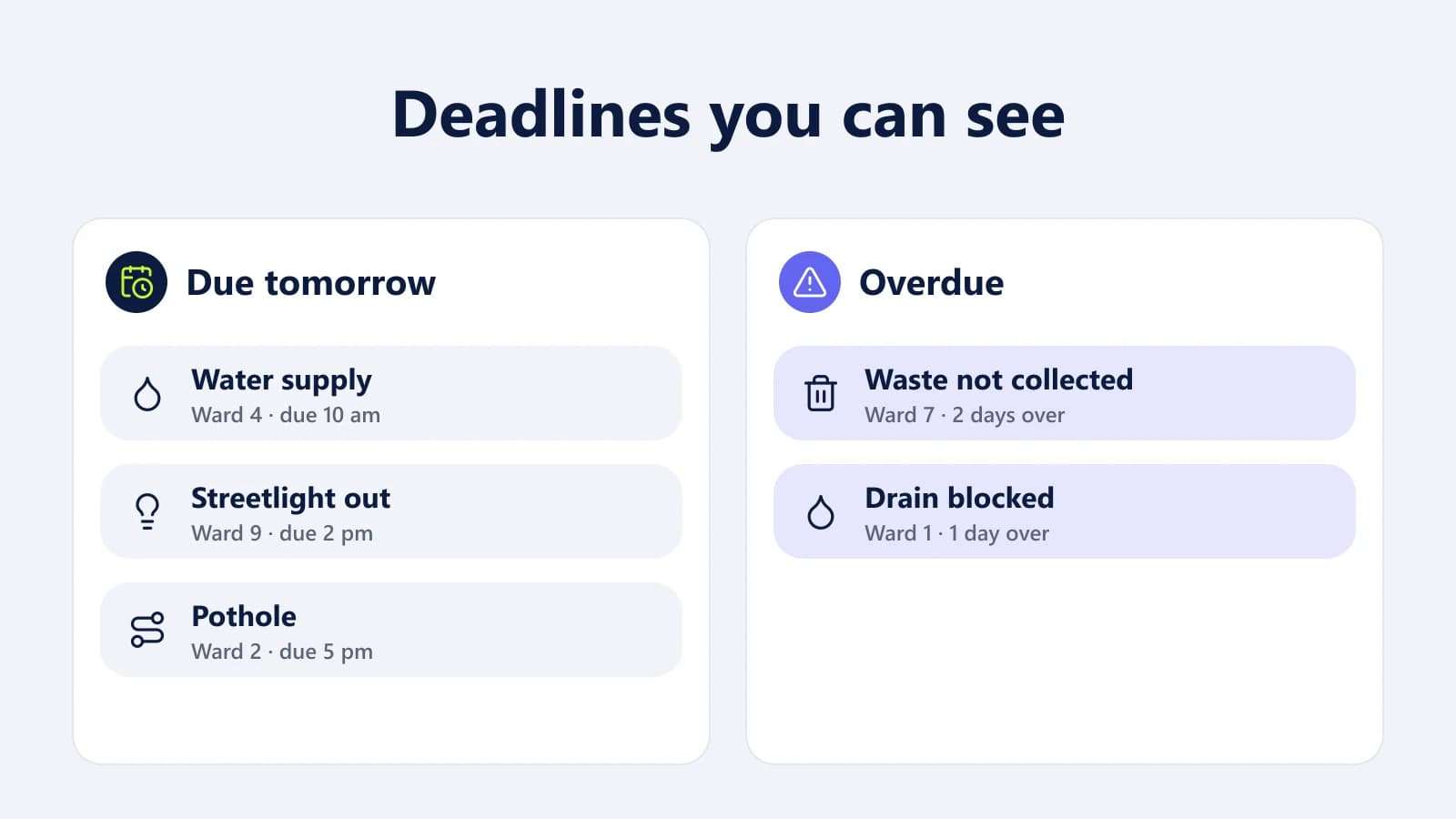
4. Does each category carry its own due date?
A streetlight and a sewage overflow should not share a deadline. Require category-based due dates that your office sets, plus a daily view of what is due tomorrow and what is already overdue.
5. Does the history travel with the complaint?
A water-supply petition may reach a ward office, move to another department and return as a status query from the same citizen. Whoever picks it up next needs the original request, every note and the last action in one place, not a search across three desks.
6. Can the citizen see the status without calling?
A tracking link or status lookup on the case number cuts the follow-up calls that clog the office phone. It also makes the deadline visible to the person it was promised to.
7. What happens when a deadline is missed?
Ask how overdue cases are surfaced: a daily digest, an alert to the officer, an escalation to a supervisor. Escalation chains vary by city, so this is usually configured during rollout. Make sure the vendor can show what exists today and what would be built for you.
Replies and closure: proof, not a status flag
8. Does a person approve every outgoing reply?
AI can draft a reply from the petition and the officer's recommendation in seconds. That saves time. But a letter to a citizen carries the office's name, so require that a named staff member approves or rejects every draft, with the reason recorded.
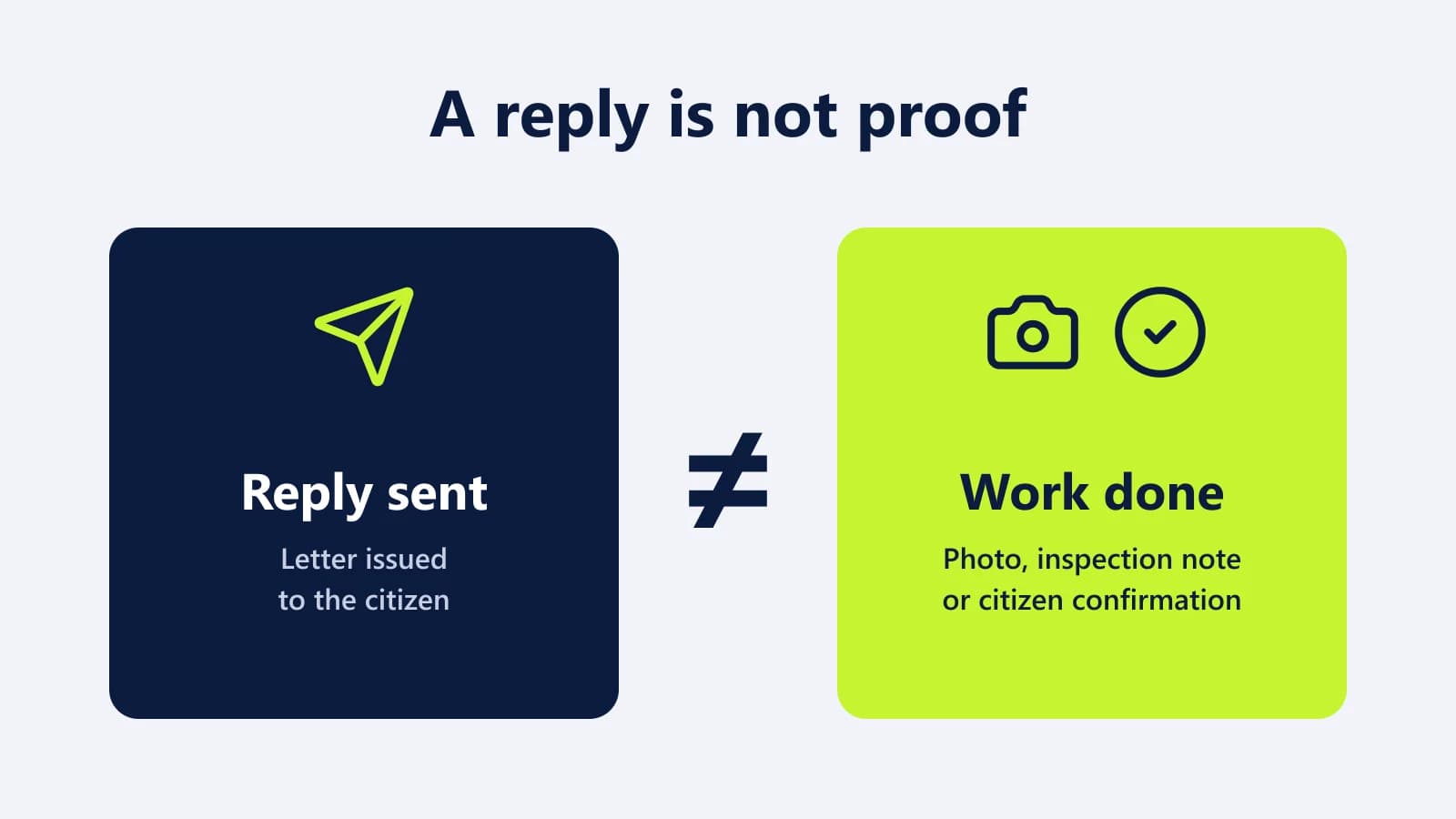
9. What evidence closes a complaint?
This is the requirement most systems fail. Residents in one city reported that a sanitation app showed complaints as resolved when no action had been taken. A reply or a forwarding letter is not proof that the field work is done. Require that closure records the actual resolution, separately from the correspondence. A photo, an inspection note or the citizen's confirmation all work.
Governance: access, data and reporting
10. Can access be scoped by role?
Viewers, operators who register cases, analysts who read reports and administrators who configure categories need different permissions. Ask to see the roles, and ask who can edit a closed case.
11. Where is the data processed and stored?
Citizen complaints contain names, phone numbers and addresses. Ask where the data is hosted, whether any AI model processes it outside that boundary, and how long records are retained. Get the answers in writing.
12. What does leadership see each week?
Pending and overdue counts by department, ward and category, and the places where complaints cluster. That dashboard is what turns a grievance queue into a governance tool, and it is what a commissioner or a public representative will actually open.
What to scope separately
Some requirements are real but belong in their own phase, and a vendor who promises all of them in the first demo is worth questioning:
- GIS maps of complaint locations
- Field-worker mobile apps for the staff who do the repair
- Work-order integration with an existing ERP or maintenance system
- Connections to state portals, which depend on what APIs the portal exposes
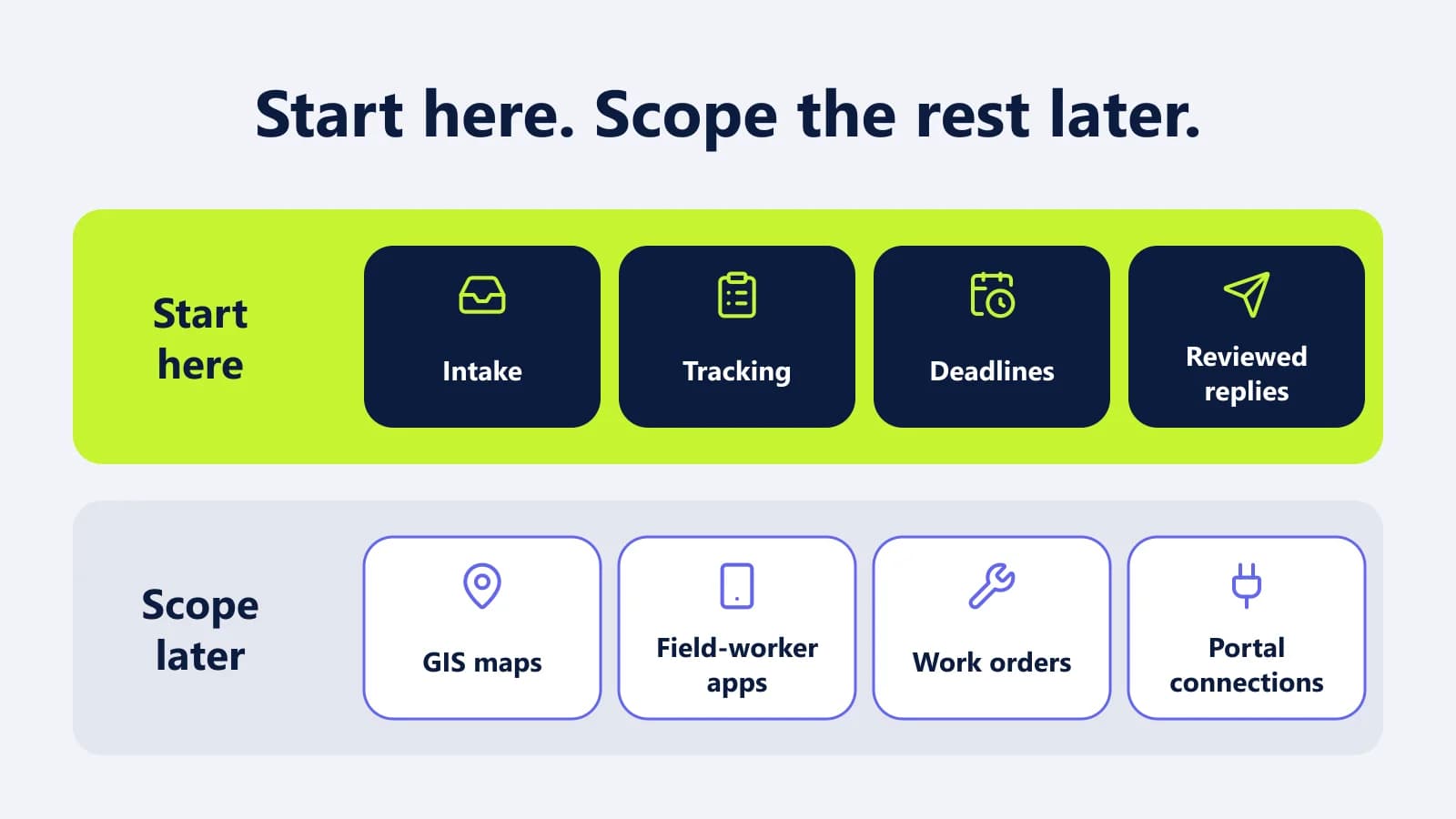
Start with intake, tracking, deadlines and reviewed replies. Those four decide whether staff use the system. The rest decides how far it reaches.
Using the checklist
Score each vendor on the twelve questions above in the same demo, with the same redacted petitions. Weight intake (1-3) and closure (9) most heavily: they are where complaint systems most often break down in practice.
For how this fits with the rest of an office's workload, see our municipal complaint workflow and the constituency petition workflow. For why the AI should only handle the reading and drafting steps, and not the whole process, see when your workflow does not need an LLM.
Quick answers
What is a municipal complaint management system?
Software that gives every citizen complaint a case number, a category, an owner and a deadline, and tracks it across ward offices and departments until staff record the outcome. Good systems take complaints from every channel into one queue.
What features should a municipal complaint management system have?
One intake for letters, calls, WhatsApp and portals; routing to the right department; category-based deadlines; a case history; citizen status tracking; staff-approved replies; closure backed by evidence; role-based access; and a pending and overdue dashboard for leadership.
How long should a municipal complaint take to resolve?
It depends on the category and on your state's rules. Central grievances on CPGRAMS have a 21-day maximum, and sanitation complaints under the Swachhata app carried targets as short as 12 hours. Set a due date per category, not one for everything.
Can AI resolve citizen complaints automatically?
No. AI can read petitions, suggest a category and draft replies. Staff decide the action, approve the reply and confirm that the field work was done.
Can a complaint system handle Marathi and other regional languages?
It should. Require extraction from scanned petitions in the languages your office receives, with uncertain reads sent to an operator to check against the original.